
Protecting Your Auto Glass During Florida Hurricane Season
How Hurricane Conditions Can Damage Auto Glass
Florida hurricane conditions can damage auto glass through windblown debris, falling branches, damaged signs, loose outdoor objects, and flooding. The wind itself is only part of the threat. An object carried by a strong gust can strike a windshield or car window with enough force to create a chip, crack, or complete break.
Existing damage makes the glass more vulnerable before the storm arrives. A rock chip has already interrupted the windshield's structure, creating a weak point where additional stress can concentrate. Heavy rain, vibration, and a sudden impact can turn manageable damage into a spreading crack. A side or back window can also shatter when struck because most of that glass is designed to break into small pieces rather than remain laminated like a windshield.
Hurricanes can create risks beyond broken glass. Water entering through an open or damaged window can reach upholstery, electronics, door components, and safety systems. Preparing the vehicle early gives you time to address existing problems and choose a safer parking location before local conditions deteriorate.
Inspect Your Windshield & Car Windows Before a Hurricane
A pre-storm auto glass inspection should identify damage or window problems that could become worse during severe weather. Complete the check while there is still time to schedule service or move the vehicle safely.
- Examine the windshield: Look for chips, short cracks, edge damage, or previous repairs that appear to be changing.
- Check every car window: Inspect the side windows, quarter glass, and back glass for cracks or impact damage.
- Test the power windows: Confirm that each window closes completely and does not slip, stall, or remain partly open.
- Look around the glass: Note loose trim, damaged molding, or areas where water has already been entering.
- Photograph the vehicle: Current photos can help document its condition before the storm if you later need to discuss damage with your insurer.
Do not delay an evacuation or ignore instructions from local officials to arrange an auto glass repair. Personal safety comes first. The purpose of checking early is to handle repairable problems before emergency preparations and road conditions make routine service impractical.
Where to Park Your Vehicle Before a Hurricane
An enclosed garage is generally the best available place to park because it reduces the vehicle's exposure to flying debris. Close the windows fully, remove valuables, and make sure the garage and its door are secured as part of the property's normal hurricane preparations. If you are leaving under an evacuation order, follow official directions rather than treating the parked vehicle as a reason to remain behind.
Choose a secure location away from trees, utility poles, power lines, signs, construction materials, and objects that could fall or become airborne. Avoid low spots, drainage areas, streams, and places with a known flood risk. A parking location that offers some protection from wind is not a good choice if storm surge or rapidly rising water can reach it.
Protecting Auto Glass Without Covered Parking
Auto glass cannot be made hurricane-proof with tape, plastic film, or an ordinary vehicle cover. NOAA specifically warns that taping windows provides little added strength and no protection from flying debris. Tape can also leave residue without preventing the glass from breaking.
If covered parking is unavailable, reduce the hazards around the vehicle. Bring lawn furniture, tools, planters, toys, and other loose outdoor items inside or secure them according to local storm guidance. Park as far as practical from trees, signs, dumpsters, unsecured fencing, and neighboring objects that could strike the glass. A fitted vehicle cover may help with dirt and minor surface debris, but it should never be treated as impact protection.
Do not place plywood, bricks, sandbags, or other heavy materials directly on the windshield or roof. Improvised weight can damage the vehicle before the storm and may become another hazard if it shifts. Moving the vehicle to a more secure location early is safer than building an untested covering around it at the last minute.
Check for Auto Glass Damage After the Storm
Inspect your vehicle only after officials indicate that conditions are safe. Look around the parking area before approaching. Downed power lines, unstable branches, broken structures, floodwater, and sharp debris can present a more immediate danger than the glass itself.
Photograph visible damage before cleaning or moving anything when it is safe to do so. Check the windshield from several angles for new chips, cracks, and impact marks. Inspect the side and back windows, then confirm that each power window operates and seals properly. Do not handle shattered tempered glass with bare hands, and do not drive if broken glass, severe cracking, or an obstructed view makes the vehicle unsafe.
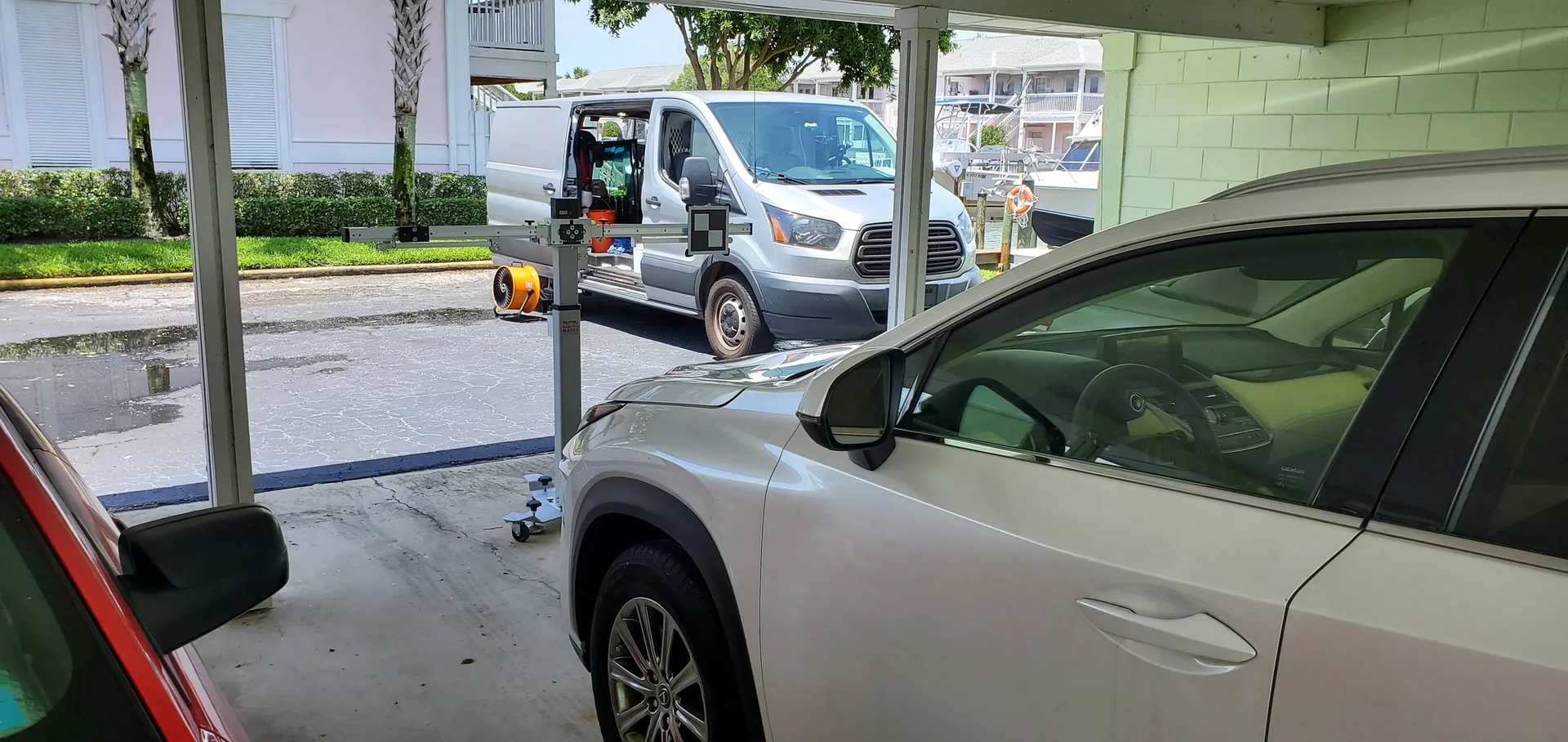
A small chip should be evaluated before normal driving and temperature changes give it more opportunities to spread. If mobile service is requested, the appointment location must be accessible and free from storm hazards. Tarpon Auto Glass can determine whether the glass is repairable, requires replacement, or needs related service such as ADAS calibration after a new windshield is installed.
Does Insurance Cover Hurricane Auto Glass Damage?
Comprehensive auto insurance commonly applies to non-collision storm losses such as windblown debris, falling objects, and flooding, but coverage depends on the specific policy and circumstances. Take clear photos, note when and where the damage occurred, and have the damage assessed before deciding whether to file a claim.
Florida's windshield-deductible rule applies to covered windshield damage under qualifying comprehensive or combined additional coverage. That protection does not automatically mean every side window, back window, regulator, or water-damage claim has the same deductible treatment. Review your policy or have the insurer clarify how each part of the loss is classified if you decide to file a claim.
Tarpon Auto Glass provides insurance claims assistance to help make the process as smooth and straightforward as possible. Our team can help you navigate the auto glass portion of the claims process and coordinate with your insurer when needed.
Schedule Auto Glass Service After A Storm in Tarpon Springs & Surrounding Areas
Hurricane-related auto glass damage should be inspected once the storm has passed and the vehicle can be reached safely. Tarpon Auto Glass provides windshield repair, windshield replacement, car window replacement, ADAS calibration, and mobile or in-shop service backed by a lifetime workmanship warranty. If you need help in Tarpon Springs, New Port Richey, Holiday, or Clearwater, contact Tarpon Auto Glass to request a free quote and schedule an appointment.